The Question of What Is Human Identity and Why It Shapes Everything We Do

One of the most important questions we ask throughout our lives is: Who am I?
At first glance, human identity may seem like a simple description of ourselves, our name, background, profession, beliefs, or personal characteristics. However, identity is much deeper. It is the evolving story we create to explain our existence, our purpose, our relationships, our challenges, and the path we believe we are meant to follow.
In The Art of Story Telling: Identity Development: A Sustainable Defense Against Existential Threats, Eric L. Johnson, PhD, explores identity as more than a label. He describes identity as the foundation through which individuals understand their place in the world and make decisions about survival, meaning, and belonging. Identity is the lens through which we interpret everything around us.
What Is Human Identity?
Human identity is the collection of experiences, beliefs, values, emotions, memories, relationships, and aspirations that shape our understanding of ourselves.
Identity answers questions such as:
- Who do I believe I am?
- What do I value?
- Where do I belong?
- What do I hope to become?
- How do I respond when life challenges my beliefs?
According to Johnson, identity development is not a completed task; it is a lifelong process. Every experience provides new information that can confirm, challenge, or reshape the story we tell ourselves about who we are.
The person we become is not created by one single event. Instead, identity develops through a continuous process of reflection, adaptation, and meaning-making.
Identity Shapes How We See the World
Identity acts as a filter. Two people can experience the same event and interpret it in completely different ways because their identities influence what they notice, value, fear, and believe.
Our identity shapes:
- How we define success and failure
- How we understand relationships
- How we respond to opportunities
- How we recognize threats
- How we make decisions
Johnson explains that identity helps us gather, analyze, and interpret information. It influences what we accept, reject, prioritize, and pursue.
In this way, identity becomes the foundation of our personal story, the explanation we create for why we exist and how we should navigate life.
The Physical, Ideological, and Psychological Dimensions of Identity
Human identity is complex because it includes multiple connected dimensions.
Physical Identity
Our physical identity includes how we understand our bodies, characteristics, and place in our environment. People often evaluate their physical qualities as strengths, vulnerabilities, or factors that influence how they believe they fit into society.
Ideological Identity
Our ideological identity involves the beliefs and ideas we use to explain the world. It helps answer questions about meaning, purpose, values, and what we consider important.
However, beliefs can either help us grow or limit us when they become rooted only in fear, assumptions, or incomplete understanding.
Psychological Identity
Psychological identity addresses our internal understanding of worth and significance. It influences how we answer questions like:
- Do I matter?
- What value do I bring?
- How do others perceive me?
Johnson emphasizes that sometimes the greatest threats we face are not external; they come from within our own minds through fear, insecurity, and distorted perceptions of ourselves.
Why Identity Shapes Everything We Do
Every decision we make is connected to the story we believe about ourselves.
Our careers, relationships, goals, conflicts, and dreams are all influenced by identity. The choices we make often reflect what we believe protects, strengthens, or advances the life story we are creating.
Identity also influences how we view others. Humans often define themselves partly by comparison, creating ideas of “us” and “them.” Johnson explores how the creation of an “other” can help people explain uncertainty but can also become harmful when it prevents honest self-reflection.
Understanding identity allows us to question the stories that guide us and determine whether those stories help us grow or keep us trapped.
Becoming More Conscious of the Story We Tell
A meaningful life requires more than simply having an identity; it requires understanding the identity we are building.
The most important questions are not only:
“Who am I?”
but also:
- “Who am I becoming?”
- “Does my story reflect my values?”
- “Are my choices moving me toward the person I want to be?”
Identity development is an ongoing journey. The more aware we become of our own stories, the more capable we are of making intentional choices, overcoming fears, and creating a life aligned with our purpose.
Explore the Deeper Meaning of Identity in The Art of Story Telling
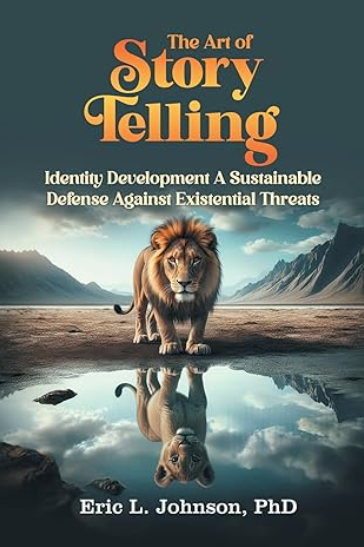
If you are interested in understanding how identity shapes individuals, families, organizations, and societies, The Art of Story Telling: Identity Development: A Sustainable Defense Against Existential Threats by Eric L. Johnson, PhD, offers a deeper exploration of the stories we create and the forces that shape them.
The book examines how identity influences survival, decision-making, culture, leadership, relationships, and our understanding of the world around us. It challenges readers to look beyond surface definitions of identity and explore the deeper narratives that guide human behavior.
Get your copy today and explore The Art of Story Telling today and begin examining the narratives that shape who you are and who you can become.