
How Our Identities Defend Against Life’s Biggest Existential Threats

In life, we’re often told that reality is what it is. But in truth, we don’t react to reality; we react to our perception of reality. And those perceptions? They’re shaped by the stories we tell ourselves and the stories we believe others are living. These stories guide our decisions, color our relationships, and ultimately, define our survival in a world full of change and challenges. This concept is not just abstract; it’s something that affects us all, every day, in both our personal and professional lives.
The Power of Our Stories
Whether it’s an argument with a friend, a conflict at work, or a global crisis, our identities play a role in shaping how we view the world. What’s often overlooked is that our perception of any given situation is framed by the stories we live. These are the narratives we construct, based on our values, experiences, and the people we interact with. And while reality may be the same for everyone, the story we tell ourselves about it can vary drastically, leading to vastly different reactions and conclusions, even when the facts are the same.
Think about a simple scenario: two people receive the same piece of news. One sees it as an opportunity, the other as a threat. Why? It’s not the facts that differ; it’s how each person’s identity, shaped by their personal story, interprets the facts. One person might see an opportunity to grow, while the other might perceive it as a challenge that threatens their current stability. These differences in perception drive behavior, influence decision-making, and ultimately shape the outcomes each person experiences.
Why Do We React the Way We Do?
The reality is, life throws countless existential threats our way, both big and small. Whether we’re facing personal setbacks, challenges at work, or societal pressures, it’s the stories we live that determine how we react. Our personal narratives, grounded in our identities, affect how we interpret threats and opportunities. This means that the way we react to life’s challenges is often more about how we perceive those challenges, rather than the challenges themselves.
For instance, a person with a deeply ingrained narrative of success and overcoming obstacles will likely face a setback by asking, “What can I learn from this?” whereas someone who sees themselves as a perpetual failure might respond with, “This confirms I’m not good enough.” These stories, these personal identities, are not just abstract concepts. They shape our decisions and actions every day, and understanding how they influence us can help us make better choices.
Stories in the Workplace: How They Shape Decisions
On the job, the stories we live shape how we respond to challenges, work with others, and even how we view our own potential. In a professional setting, two colleagues might tackle the same project with similar resources, yet the results can differ. One might see the project as an opportunity to prove their worth, while the other may feel overwhelmed and believe that failure is inevitable. Both individuals are dealing with the same facts, yet their perception, shaped by the stories they live, leads to very different outcomes.
For example, a manager who believes in collaboration might respond to a team challenge by seeking input from everyone, fostering a sense of inclusivity. On the other hand, a manager who perceives authority as a key to leadership might make top-down decisions without consulting the team, leading to possible resentment or disengagement. Again, it’s the story each person tells themselves about leadership and success that influences their actions.
The Ripple Effect: How Our Stories Impact Others
The stories we live don’t just shape our own experiences; they impact the people around us as well. The narratives we hold about ourselves and others influence our interactions, collaboration, and communication. At work, our ability to empathize, collaborate, and support each other is deeply impacted by the stories we tell about who we are and how we relate to others.
Consider a workplace where the story is one of competition, rather than collaboration. In such an environment, individuals may view colleagues as rivals, interpreting every interaction as a potential threat to their success. Conversely, in a workplace where the story is one of teamwork and shared goals, individuals are more likely to approach challenges with a spirit of cooperation and support. These shifts in narrative, which stem from our identities, can make or break a team’s effectiveness.
Changing the Story
The good news is that if we can become more aware of the stories we’re living, we can begin to change them. Whether at work or in our personal lives, understanding how our identities shape our perceptions of reality can empower us to respond to challenges more thoughtfully and constructively. If we notice that our default narrative leads to stress, anxiety, or defensiveness, we can take steps to shift our perspective and reframe the story in a more empowering way.
The key is to ask ourselves: What story am I living? How is this story shaping my decisions, my relationships, and my responses to challenges? And, most importantly, how is it impacting the results I’m getting? By questioning our own narratives, we can better navigate the complexities of life and make choices that align with the outcomes we truly want.
Conclusion: Stories Aren’t Just for Fiction
Our identities are not just the sum of our past experiences; they are the stories we continue to tell ourselves about who we are and how we fit into the world. These stories shape our perception of reality, influence our actions, and impact the results we experience in our personal and professional lives. By becoming aware of the stories we live, we can begin to rewrite them, empowering ourselves to approach life’s challenges with resilience, clarity, and purpose.
Ultimately, life’s biggest existential threats are not just the circumstances we face, they are the stories we tell ourselves about those circumstances. Understanding the power of our own narrative is the first step in defending against those threats and living a life aligned with our true potential.
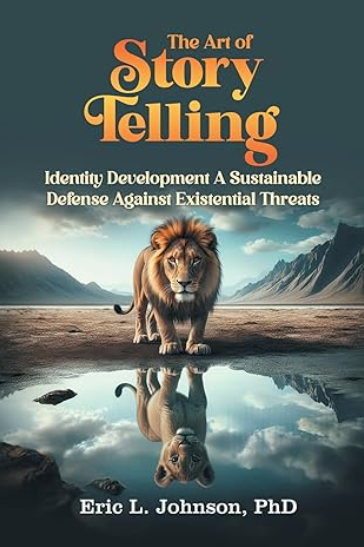
Want to explore how the stories you live shape your reality? Check out The Art of Storytelling: Identity Development A Sustainable Defense Against Existential by Eric L. Johnson.
The book emphasizes that identity is a dynamic process, continuously evolving in response to challenges, fears, and external pressures. Johnson argues that the stories we tell ourselves about who we are provide a framework for understanding and responding to life’s uncertainties, helping us make sense of adversity and find meaning in the face of suffering.
By exploring these personal narratives and recognizing how they shape our perceptions and reactions, we gain the tools to navigate existential threats with resilience and purpose. Johnson’s exploration of identity development mirrors the idea that a well-developed sense of self acts as a powerful defense against life’s most significant challenges, empowering us to confront uncertainty and grow through it. Get your copy today!