
How Existential Philosophy Explains Human Purpose and Struggle

Throughout history, humans have wrestled with some of the most profound questions imaginable: Why do we exist? What gives life meaning? How should we respond to uncertainty, suffering, and change?
These questions form the foundation of existential philosophy, the exploration of human existence, freedom, responsibility, identity, and the search for purpose in an unpredictable world.
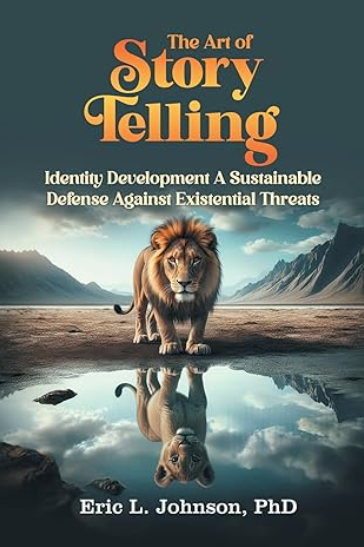
In The Art of Story Telling: Identity Development: A Sustainable Defense Against Existential Threats, Eric L. Johnson, PhD, examines these questions through the lens of identity development. The book suggests that human beings survive not only through physical adaptation but also through the stories they create about themselves, their purpose, and their place in the world. Identity becomes the framework through which people understand struggle, overcome challenges, and define what makes life meaningful.
The Human Need to Understand Existence
Existential philosophy begins with a fundamental reality: human beings are aware of their own existence and seek meaning within it.
Unlike other forms of life, humans constantly reflect on questions such as:
- Who am I?
- Why am I here?
- What is my purpose?
- What makes my life valuable?
Johnson explains that identity is not simply an answer to “Who are we?” It is a broader understanding of who we believe we can become, how we navigate challenges, and where we believe our journey is leading.
Our identity becomes the story that helps us interpret our experiences and determine how we respond to the world around us.
The Struggle Between Freedom and Uncertainty
One of the central themes of existential thought is that human beings must create meaning while facing uncertainty.
Life does not provide a universal instruction manual that tells each person exactly who to become or what choices to make. Instead, individuals must make decisions based on their experiences, beliefs, values, hopes, and fears.
Johnson describes identity development as a journey without a fixed destination. It requires continuous evaluation and adjustment as people encounter new experiences and challenges.
This struggle is not a weakness; it is part of what makes human life meaningful. The process of questioning, choosing, and growing allows individuals to actively participate in creating their own stories.
Identity as a Response to Existential Threats
Existential philosophy often explores human confrontation with fear, mortality, uncertainty, and meaninglessness. Johnson connects these struggles to identity development by explaining that individuals and groups use identity as a way to understand and defend their existence.
Identity helps people determine:
- What matters most
- What threats should be taken seriously
- What values should guide action
- What future they want to create
The threats we experience are not always physical. They can be psychological, emotional, ideological, or social. Our identity influences how we recognize and respond to these challenges.
The Role of Fear in Finding Purpose
Fear is an unavoidable part of the human experience. Existential philosophy recognizes that awareness of uncertainty and vulnerability can create anxiety, but it can also inspire growth.
Johnson explores how fear influences the stories people create about themselves and others. Fear can motivate caution and preparation, but when left unchecked, it can distort reality and cause people to define themselves through opposition or conflict.
A healthy understanding of identity requires acknowledging fear while allowing hope, values, and purpose to guide decisions.
Creating Meaning Through the Stories We Live
Humans do not simply experience life; we interpret it.
The stories we tell ourselves influence how we understand success, failure, relationships, challenges, and opportunities. These narratives help answer the existential question: What does my life mean?
Johnson argues that identity development requires reflection. By becoming more aware of the stories we create, we can evaluate whether those stories empower us or limit our ability to grow.
The journey toward purpose is therefore not about discovering a single answer. It is about continuously developing a deeper understanding of ourselves and our relationship with the world.
Finding Purpose Through Self-Understanding
Existential philosophy teaches that struggle is not separate from life’s meaning; it is often the path through which meaning is discovered.
Our challenges force us to examine our values, confront our fears, and decide what kind of person we want to become. Identity development provides the foundation for this process by helping us construct a meaningful story about our existence.
When we understand our own narratives, we become better equipped to face uncertainty, build stronger relationships, and create lives aligned with our values.
For readers interested in exploring the deeper connections between identity, purpose, struggle, and human existence, The Art of Story Telling: Identity Development: A Sustainable Defense Against Existential Threats by Eric L. Johnson, PhD, offers a powerful examination of how people create meaning through the stories they live.
The book explores how identity shapes individuals, families, organizations, and societies, and how the narratives we create influence the way we understand ourselves, respond to challenges, and defend what we believe matters most. Buy your copy today!