
Shifting Your Perception of Reality: How to See the World Through a New Lens

Have you ever looked back on a situation and realized you were not seeing it clearly at the time? Maybe fear made a challenge feel impossible. Maybe past disappointment caused you to doubt a new opportunity. Or maybe you believed one version of yourself for so long that it became difficult to imagine anything different.
The truth is, we do not experience life only through facts. We experience life through interpretation. Our memories, emotions, beliefs, fears, and hopes all shape our perception of reality. The way we see the world influences how we respond to change, how we understand others, and how we define ourselves. When that inner lens shifts, everything around us can begin to look different, not because the world has suddenly changed, but because we have.
Learning to shift your perception of reality is not about pretending problems do not exist. It is about becoming aware of the story you are using to explain them. Once you recognize that story, you can begin to question it, reshape it, and choose a new way forward.
What Shapes Your Perception of Reality?
Your perception of reality is formed over time. Family experiences, culture, relationships, education, success, failure, fear, and hope all help create the lens through which you see yourself and others. These influences teach you what feels safe, what feels threatening, what feels possible, and what feels out of reach.
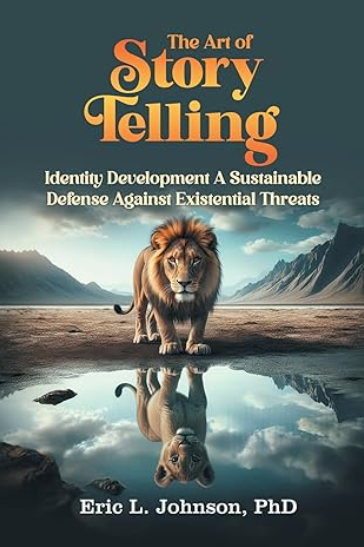
In The Art of Story Telling: Identity Development A Sustainable Defense Against Existential Threats, Eric L. Johnson, PhD, explores how identity is connected to the stories people live by. These stories shape how individuals, families, organizations, and even nations understand their place in the world. When your story is built around fear or limitation, your reality may feel smaller than it truly is. But when your story is built around reflection, courage, and possibility, your world can begin to expand.
Why Your Inner Lens Matters
The lens you use to see the world affects your decisions. It influences the relationships you choose, the opportunities you pursue, the risks you avoid, and the way you respond to challenges.
For example, if you see change as a threat, you may resist anything unfamiliar. But if you see change as an invitation to grow, you may approach the unknown with curiosity instead of fear. The situation may be the same, but your response changes because your perception of reality has shifted.
This is why self-awareness is so important. When you understand the lens you are using, you can decide whether it is helping you or holding you back.
Recognizing the Stories That Limit You
Many people carry old stories without realizing it. These stories may sound like, “I am not ready,” “People like me do not succeed,” “I always fail,” or “It is safer not to try.” Over time, these beliefs can begin to feel like facts.
But a belief is not always reality. Sometimes, it is simply a story that has gone unchallenged for too long.
Shifting your perception of reality begins with asking honest questions: Where did this belief come from? Is it still true? What evidence have I ignored? What new story could help me grow?
Seeing Through a New Lens
A new lens often begins with a new question. Instead of asking, “Why is this happening to me?” you might ask, “What can this teach me?” Instead of assuming difference is dangerous, you might ask, “What can I learn from this perspective?” Instead of seeing fear as a stop sign, you might see it as a signal that something important deserves your attention.
This shift does not happen all at once. It happens through reflection, practice, and a willingness to see yourself more honestly.
A New Path Begins with Awareness
When you shift your perception of reality, you give yourself permission to grow beyond old assumptions. You begin to see challenges as teachers, differences as opportunities, and uncertainty as part of becoming. Most importantly, you begin to understand that the way you see the world can change the way you live in it.
Your reality is shaped by the story you believe, the fears you carry, and the meaning you give to your experiences. In The Art of Story Telling: Identity Development A Sustainable Defense Against Existential Threats, Eric L. Johnson, PhD, invites readers to look beneath the surface of their assumptions and examine how identity influences the way they interpret the world.
This book is a powerful choice for anyone ready to challenge old patterns, rethink limiting beliefs, and understand why certain people, places, or changes feel threatening. Through its thoughtful exploration of identity, fear, otherness, and growth, it encourages you to ask deeper questions about who you are, what shapes your perspective, and how you can begin seeing life through a clearer, more intentional lens.
Pick up your copy today and begin the work of understanding your story, not just as something you have lived, but as something you still have the power to shape.