
Practical Tips for Overcoming Psychological Barriers and Moving Toward Personal Freedom

Practical Tips for Overcoming Psychological Barriers and Moving Toward Personal Freedom

We often imagine freedom as something outside of us: more money, more time, better opportunities, or fewer responsibilities. But sometimes the first door to freedom opens inward. Before life changes around us, something has to shift within us. That is where overcoming psychological barriers becomes so important.

Psychological barriers are the invisible walls built from fear, old experiences, self-doubt, shame, comparison, or the need to stay safe. They can keep us from applying for the job, having the conversation, leaving the comfort zone, starting the project, or believing we are worthy of something better. The challenge is that these barriers rarely announce themselves. They often sound reasonable: “Wait until you’re ready.” “Don’t risk it.” “You’re not the kind of person who does that.”

Personal freedom begins when we stop accepting every limiting thought as truth.

1. Notice Where You Keep Stopping

A powerful place to begin is by paying attention to the moments when you pull back. Is there a dream you keep delaying? A conversation you keep avoiding? A decision you keep overthinking?

These stopping points are clues. They reveal where fear may be directing your life. Instead of judging yourself, get curious. Ask, “What do I believe will happen if I move forward?” The answer often exposes the barrier.

2. Challenge the Old Script

Many psychological barriers are connected to old internal scripts. Maybe you learned that success brings criticism, that mistakes are embarrassing, or that your needs are less important than everyone else’s.

To challenge the script, write it down clearly. Then ask: “Who taught me this?” “Is it completely true?” “What would I believe if I were not afraid?” This simple practice helps separate your present identity from past conditioning.

3. Practice One Brave Action at a Time

You do not need a complete life overhaul to begin overcoming psychological barriers. You need one brave action. Send the email. Make the appointment. Say what you mean. Try again after failing. Rest without guilt. Ask for what you need.

Small acts of courage are not small to the mind. They teach your nervous system that discomfort is survivable and that growth does not have to mean danger.

4. Stop Waiting to Feel Fully Ready

Readiness is often built through movement, not before it. Many people stay stuck because they believe confidence must come first. In reality, confidence often comes after action.

Personal freedom grows when you allow yourself to begin imperfectly. You can be nervous and still move forward. You can be uncertain and still choose wisely. You can be healing and still build something meaningful.

5. Choose Environments That Support Expansion

Some environments keep old barriers alive. If you are surrounded by constant criticism, fear-based thinking, or people who only know the old version of you, growth can feel harder than it needs to be.

Seek spaces that encourage honesty, accountability, creativity, and courage. The right environment does not remove all struggle, but it reminds you that a larger version of your life is possible.
Moving Toward Personal Freedom

Overcoming psychological barriers is not about becoming someone else. It is about becoming less controlled by fear and more guided by truth. Each time you question an old belief, take a brave step, or choose growth over avoidance, you reclaim more of your freedom.

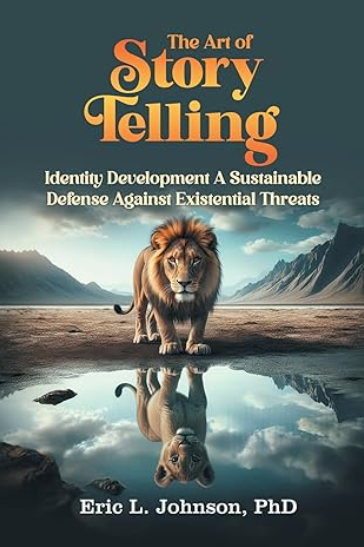
For a deeper exploration of how identity, fear, and self-perception shape the lives we build, read The Art of Story Telling: Identity Development A Sustainable Defense Against Existential Threats by Eric L. Johnson, PhD.

This book goes beyond surface-level motivation. It invites readers to examine the stories that influence how they define themselves, interpret challenges, and respond to perceived threats. Dr. Johnson’s work is especially valuable for anyone who wants to understand why internal barriers form in the first place, and how identity development can become a path toward clarity, resilience, and personal freedom.

Get your copy of The Art of Story Telling and begin looking at your life not as a fixed script, but as a story you can understand, question, and intentionally reshape.


Identifying and Breaking Through Psychological Barriers That Hold You Back

Identifying and Breaking Through Psychological Barriers That Hold You Back

Sometimes the biggest obstacles in life are not the ones standing in front of us. They are the ones living quietly inside our own minds. We may call them fear, self-doubt, procrastination, overthinking, insecurity, or perfectionism. But at their core, these psychological barriers shape how we see ourselves, what we believe we deserve, and how far we allow ourselves to grow.

The difficult part is that psychological barriers do not always feel like barriers. Sometimes, they sound like logic. “I’m not ready.” “Now is not the right time.” “I might fail.” “People will judge me.” Over time, these thoughts can become part of the story we tell ourselves about who we are. And once they become familiar, they can feel like the truth.

What Are Psychological Barriers?

Psychological barriers are internal beliefs, fears, or emotional patterns that prevent us from moving forward. They can come from past experiences, criticism, failure, trauma, family expectations, social pressure, or the way we learned to protect ourselves.

For example, someone who failed publicly may develop a fear of trying again. Someone who was constantly criticized may struggle to trust their own voice. Someone who grew up in an environment where safety depended on staying quiet may find it difficult to speak up, even when they have something valuable to say.

These barriers are not signs of weakness. In many cases, they began as survival tools. The problem is that what once protected us can eventually limit us.

How Your Story Shapes Your Limits

In The Art of Story Telling: Identity Development A Sustainable Defense Against Existential Threats, Eric L. Johnson, PhD, explores how identity is formed through the stories we live by. These stories help us understand who we are, what threatens us, and how we should respond to the world.

This idea matters because many psychological barriers are tied to identity. If you see yourself as incapable, unworthy, invisible, or always at risk, you may unconsciously make choices that support that belief. You may avoid opportunities, silence your ideas, or remain in situations that feel familiar even when they no longer serve you.

Breaking through begins when you ask: Is this belief protecting me, or is it preventing me from becoming who I am meant to be?

Recognizing the Barriers Holding You Back

The first step is awareness. Pay attention to the patterns that keep repeating in your life. Do you avoid certain conversations? Do you talk yourself out of new opportunities? Do you assume rejection before it happens? Do you confuse discomfort with danger?

Psychological barriers often reveal themselves through repeated hesitation. When you notice yourself shrinking, delaying, or assuming the worst, pause and ask what fear is underneath the reaction.

Turning Awareness Into Action

Once you identify a barrier, challenge it with truth and movement. You do not have to change everything overnight. Growth often begins with one honest decision: applying for the opportunity, setting a boundary, asking for help, starting the project, or speaking your truth.

Each small action gives your mind new evidence. Over time, you begin to rewrite the story from “I can’t” to “I am learning,” and eventually, “I am capable.”

Growth Begins Beyond the Barrier

Breaking through psychological barriers is not about becoming fearless. It is about refusing to let fear make every decision. When you understand your inner barriers, you gain the power to respond with clarity instead of habit. That is where real growth begins.

To better understand the stories, fears, and internal patterns that shape your identity, explore The Art of Story Telling: Identity Development A Sustainable Defense Against Existential Threats by Eric L. Johnson, PhD. This insightful book invites readers to examine the deeper narratives that influence how they see themselves, define threats, and respond to life’s challenges.

Through its powerful reflections on identity, fear, self-worth, and personal meaning, the book helps you recognize how psychological barriers can form, and how greater self-awareness can open the door to transformation. Whether you are seeking personal growth, emotional clarity, or a stronger sense of purpose, this book offers a thoughtful guide for questioning old stories and building a more intentional path forward.

Start reading today and take the first step toward understanding the barriers within you, breaking through them, and creating a story rooted in courage, resilience, and growth.

Shifting Your Perception of Reality: How to See the World Through a New Lens

Shifting Your Perception of Reality: How to See the World Through a New Lens

Have you ever looked back on a situation and realized you were not seeing it clearly at the time? Maybe fear made a challenge feel impossible. Maybe past disappointment caused you to doubt a new opportunity. Or maybe you believed one version of yourself for so long that it became difficult to imagine anything different.

The truth is, we do not experience life only through facts. We experience life through interpretation. Our memories, emotions, beliefs, fears, and hopes all shape our perception of reality. The way we see the world influences how we respond to change, how we understand others, and how we define ourselves. When that inner lens shifts, everything around us can begin to look different, not because the world has suddenly changed, but because we have.

Learning to shift your perception of reality is not about pretending problems do not exist. It is about becoming aware of the story you are using to explain them. Once you recognize that story, you can begin to question it, reshape it, and choose a new way forward.

What Shapes Your Perception of Reality?

Your perception of reality is formed over time. Family experiences, culture, relationships, education, success, failure, fear, and hope all help create the lens through which you see yourself and others. These influences teach you what feels safe, what feels threatening, what feels possible, and what feels out of reach.

In The Art of Story Telling: Identity Development A Sustainable Defense Against Existential Threats, Eric L. Johnson, PhD, explores how identity is connected to the stories people live by. These stories shape how individuals, families, organizations, and even nations understand their place in the world. When your story is built around fear or limitation, your reality may feel smaller than it truly is. But when your story is built around reflection, courage, and possibility, your world can begin to expand.

Why Your Inner Lens Matters

The lens you use to see the world affects your decisions. It influences the relationships you choose, the opportunities you pursue, the risks you avoid, and the way you respond to challenges.

For example, if you see change as a threat, you may resist anything unfamiliar. But if you see change as an invitation to grow, you may approach the unknown with curiosity instead of fear. The situation may be the same, but your response changes because your perception of reality has shifted.

This is why self-awareness is so important. When you understand the lens you are using, you can decide whether it is helping you or holding you back.

Recognizing the Stories That Limit You

Many people carry old stories without realizing it. These stories may sound like, “I am not ready,” “People like me do not succeed,” “I always fail,” or “It is safer not to try.” Over time, these beliefs can begin to feel like facts.

But a belief is not always reality. Sometimes, it is simply a story that has gone unchallenged for too long.

Shifting your perception of reality begins with asking honest questions: Where did this belief come from? Is it still true? What evidence have I ignored? What new story could help me grow?

Seeing Through a New Lens

A new lens often begins with a new question. Instead of asking, “Why is this happening to me?” you might ask, “What can this teach me?” Instead of assuming difference is dangerous, you might ask, “What can I learn from this perspective?” Instead of seeing fear as a stop sign, you might see it as a signal that something important deserves your attention.

This shift does not happen all at once. It happens through reflection, practice, and a willingness to see yourself more honestly.

A New Path Begins with Awareness

When you shift your perception of reality, you give yourself permission to grow beyond old assumptions. You begin to see challenges as teachers, differences as opportunities, and uncertainty as part of becoming. Most importantly, you begin to understand that the way you see the world can change the way you live in it.

Your reality is shaped by the story you believe, the fears you carry, and the meaning you give to your experiences. In The Art of Story Telling: Identity Development A Sustainable Defense Against Existential Threats, Eric L. Johnson, PhD, invites readers to look beneath the surface of their assumptions and examine how identity influences the way they interpret the world.

This book is a powerful choice for anyone ready to challenge old patterns, rethink limiting beliefs, and understand why certain people, places, or changes feel threatening. Through its thoughtful exploration of identity, fear, otherness, and growth, it encourages you to ask deeper questions about who you are, what shapes your perspective, and how you can begin seeing life through a clearer, more intentional lens.

Pick up your copy today and begin the work of understanding your story, not just as something you have lived, but as something you still have the power to shape.

How Embracing Personal Transformation Can Lead to a New Path of Growth

How Embracing Personal Transformation Can Lead to a New Path of Growth

Personal transformation is not always dramatic. Sometimes, it begins quietly, with a question, a moment of discomfort, a desire for change, or the realization that the story we have been living no longer fits who we are becoming. Growth often starts when we become willing to look honestly at ourselves, our fears, our choices, and the identity we have built over time.

In The Art of Story Telling: Identity Development A Sustainable Defense Against Existential Threats, Eric L. Johnson, PhD, explores identity as the story we tell ourselves about who we are, why we exist, what we value, and how we respond to life’s challenges. That idea is powerful because personal transformation begins when we recognize that our story is not fixed. It can be questioned, rewritten, strengthened, and expanded.

Understanding the Story You Are Living

Each of us carries a personal narrative. This narrative shapes how we see opportunities, relationships, setbacks, and even threats. When we believe we are capable, worthy, and growing, we tend to make decisions that support that belief. But when our story is shaped by fear, insecurity, or past disappointment, we may limit ourselves without realizing it.

Personal transformation asks us to pause and reflect: What story am I living? Is it helping me grow, or is it keeping me stuck? These questions open the door to self-awareness, and self-awareness is often the first step toward meaningful change.

Growth Requires Honest Reflection

Transformation does not happen by avoiding discomfort. It happens when we are willing to examine the parts of ourselves that need attention. This may include old habits, limiting beliefs, fear of failure, unresolved pain, or the need for approval from others.

Honest reflection can be challenging, but it is also empowering. When we understand why we think, react, and choose the way we do, we gain the ability to respond differently. Instead of simply repeating old patterns, we begin creating a more intentional path forward.

Turning Fear into Fuel

Fear is often seen as something to overcome, but it can also become a guide. Fear can reveal where we feel vulnerable, where we need healing, or where growth is calling us. The key is not allowing fear to control the story.

Personal transformation happens when we stop letting fear define our limits and start using it as information. A new path of growth often begins when we ask, What is this fear trying to teach me? Rather than How can I avoid it?

Choosing a New Path

A transformed life is not built overnight. It is built through small, consistent choices that align with who we are becoming. This may mean setting healthier boundaries, pursuing new goals, changing how we speak to ourselves, or surrounding ourselves with people who support our growth.

The beauty of personal transformation is that it gives us permission to evolve. We are not bound forever to old versions of ourselves. We can develop a new understanding of our identity, our purpose, and the impact we want to have.

Final Thoughts

Personal transformation is the process of becoming more conscious of the story you are living and more intentional about the story you are creating. It is an invitation to grow beyond fear, embrace self-discovery, and move toward a life that reflects your deepest values and highest possibilities.

Ready to explore the story behind your identity and discover how growth begins from within? Read The Art of Story Telling: Identity Development A Sustainable Defense Against Existential Threats by Eric L. Johnson, PhD. This thought-provoking book challenges readers to examine the narratives that shape their lives, confront the fears that influence their decisions, and begin the powerful journey of personal transformation. Let this book guide you toward deeper self-awareness, stronger identity development, and a renewed path of purpose, resilience, and growth. Get your copy today!